
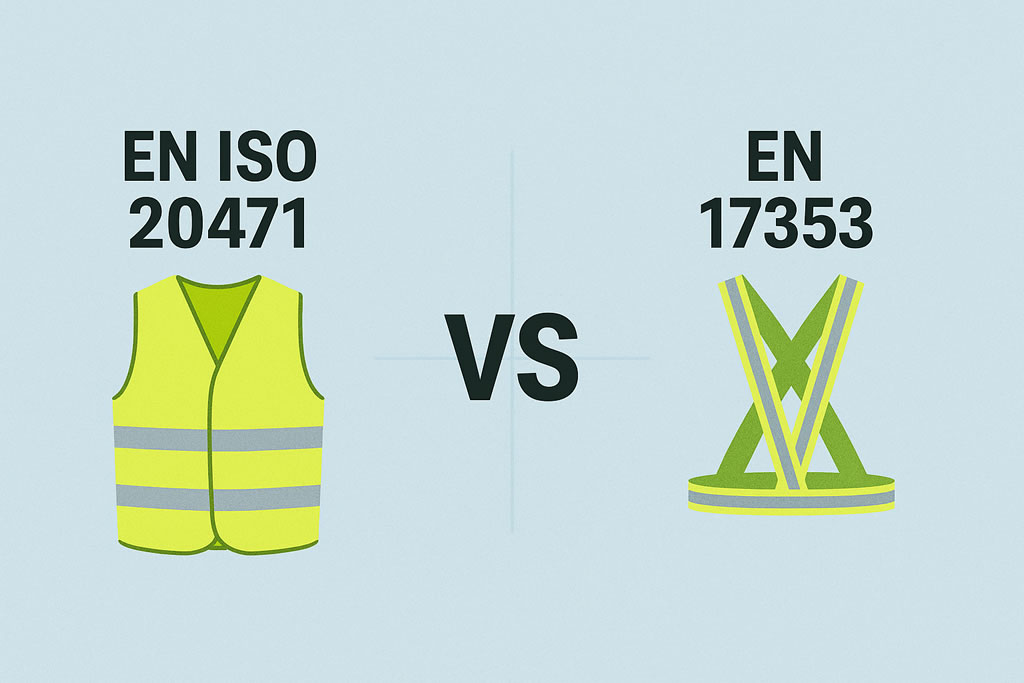
If you work with reflective safety gear, you’ve probably seen the terms EN ISO 20471 and EN 17353 on product labels. Both are European safety standards that help people stay visible, but they serve very different purposes. This post breaks down what each standard means, who should use them, and how to choose the right one — all explained in easy language.
Understanding the Two Standards
EN ISO 20471 – High Visibility for High-Risk Jobs
This standard is made for workers in dangerous areas — places with traffic, heavy equipment, or poor lighting. It covers high-visibility clothing like safety vests, jackets, and pants. These garments are designed so drivers and machine operators can easily see workers both during the day and at night.
Key features:
- High risk use: Construction, roadwork, emergency services.
- Bright fluorescent colors: Only yellow, orange-red, or red are accepted.
- Large reflective areas: Ensures visibility from all sides (360°).
- Strict testing: Materials are tested for durability, brightness, washing, and weather resistance.
- Performance classes:
- Class 1 – Lowest visibility (for minor risks)
- Class 2 – Medium visibility (most safety vests)
- Class 3 – Highest visibility (full-body garments)
Example: Yolite 1124-YEL (Class 2 vest) – used by road or construction workers.
EN 17353 – Enhanced Visibility for Medium-Risk Situations
EN 17353 focuses on everyday safety — where visibility is helpful but not life-critical. This includes cyclists, joggers, schoolchildren, and warehouse workers who want to be seen in low-light situations.
Key features:
- Medium risk use: Cycling, walking, or working near slow traffic.
- Flexible product range: Includes vests, harnesses, armbands, and slap wraps.
- More color freedom: Yellow, orange, red, and even other bright colors may be used.
- Smaller reflective area: Enough to catch light but more comfortable and stylish.
- Easier to design: Allows creative patterns and lightweight materials.
- Product types:
- Type A – Daytime visibility (fluorescent only)
- Type B – Nighttime visibility (reflective only)
- Type AB – Both day and night visibility
Example: Yolite PK5513 (Type AB3 vest) – used by cyclists or school patrols.
Comparison Table
| Category | EN ISO 20471 | EN 17353 |
|---|---|---|
| Risk level | High | Medium |
| Typical users | Workers on roads, airports, or industrial sites | Cyclists, children, pedestrians |
| Garment types | Vests, jackets, trousers, coveralls | Vests, harnesses, armbands, accessories |
| Color rules | Only fluorescent yellow, orange-red, or red | Flexible (yellow, orange, red preferred) |
| Reflective area | Large – full 360° coverage | Smaller – partial coverage allowed |
| Design control | Strict and regulated | Creative and flexible |
| Performance level | Class 1–3 | Type A, B1–B3, AB1–AB3 |
| Testing level | Very strict | Moderate |
| Example product | Yolite 1124-YEL (Class 2 vest) | Yolite PK5513 (Type AB3 vest) |
Quick Tips for Choosing the Right Vest
- Choose EN ISO 20471 if: you or your workers are around moving vehicles or machines. Safety rules often require this standard in industrial zones.
- Choose EN 17353 if: you need better visibility in daily life — walking, biking, or for children’s safety.
Remember:
- EN ISO 20471 = Professional protection
- EN 17353 = Personal visibility enhancement
Real-Life Scenarios
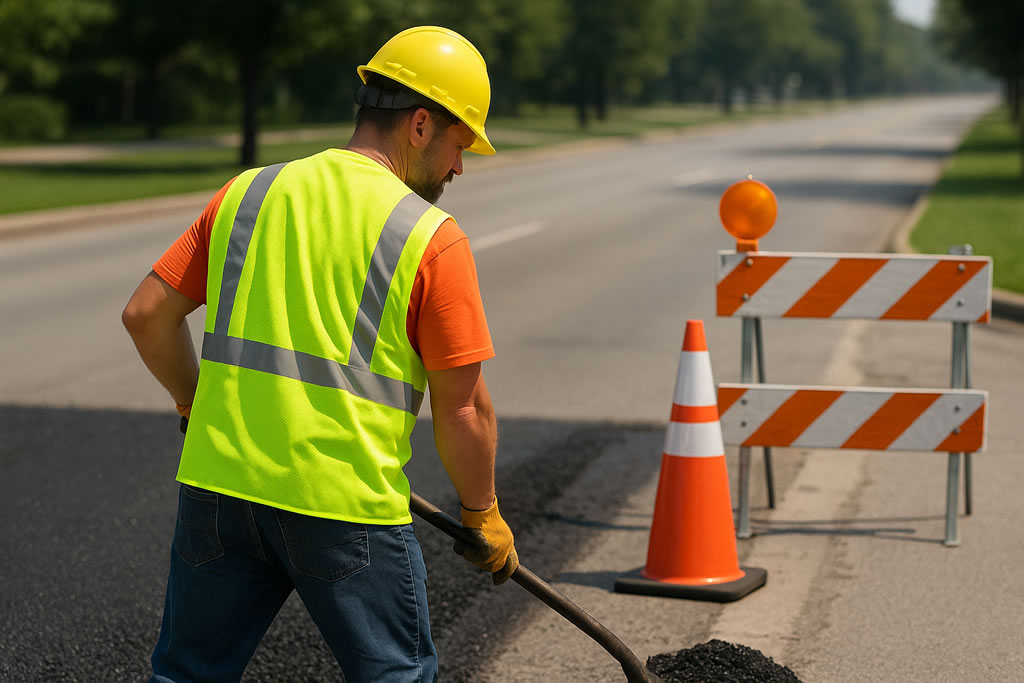
- A construction worker repairing roads at night should wear EN ISO 20471 Class 3 gear.
- A warehouse worker or bicycle commuter can use an EN 17353 Type AB3 vest or harness for daily safety.
- School safety patrols often wear EN 17353 because it provides enough visibility without being too heavy.